Industrial Design Thesis
LuLu
- Partner Bunny & Clyde
- Institution University of Twente
- Role Research & Industrial Design
Developed for the growing nomadic generation, LuLu is a versatile, tool-less modular furniture system. Born out of a desire to challenge the environmental devastation of fast furniture, LuLu represents a shift toward retention, repurposing, and sustainable living.
How LuLu Works
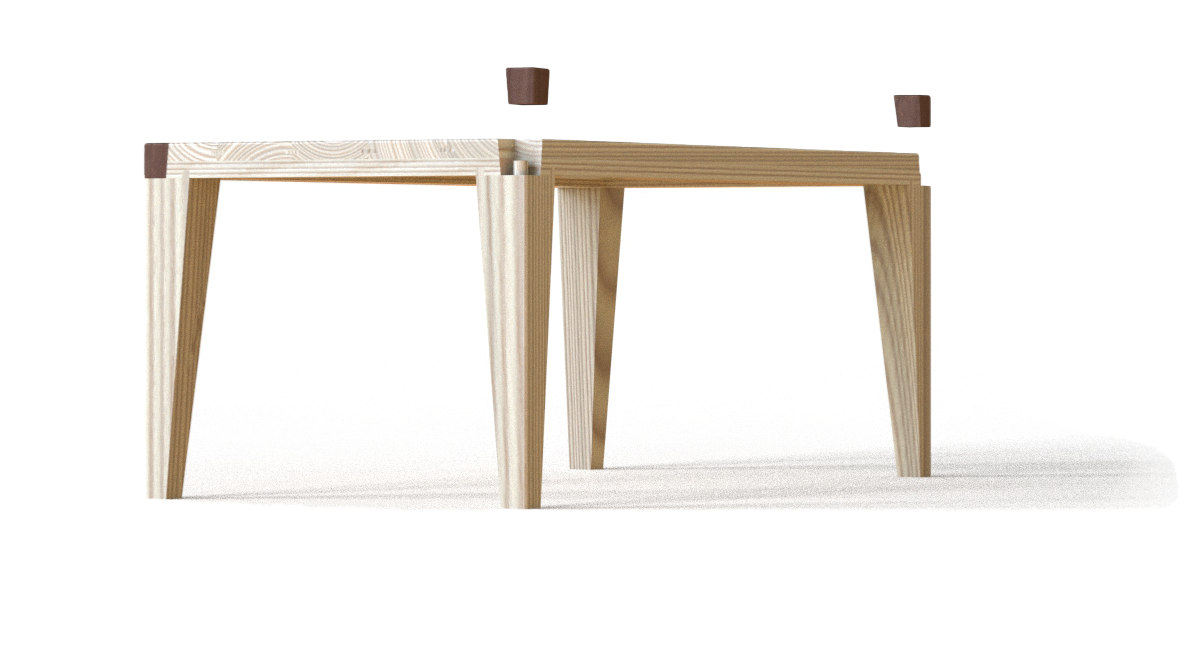
Through intelligent, concealed dowels and boreholes, the units effortlessly lock together. No tools, no complex instructions—just rapid reconfiguration to suit any need.
Context & Collaboration
In September 2018, I moved to the Netherlands to pursue an MSc in Industrial Design Engineering at the University of Twente. Following the Human Technology Relations track, I tailored my degree to deeply explore design philosophy and sustainability.
Conceived in May 2020, during the early stages of the global pandemic, this thesis was driven by an appreciation for the natural world and a desire to combat the fast furniture industry. I partnered with Bunny & Clyde, a sustainable Irish furniture company founded in 2013. They specialize in creating "Modern Heirlooms"—enduring, non-toxic furniture crafted from solid woods, designed to adapt to a family's changing life stages and be passed down through generations.
Unpacking Fast Furniture
To design a sustainable alternative to fast furniture, I first had to understand how the industry got here—and why consumers keep coming back to it.
The Nomadic Paradox & Perishable Marketing
The original "flat-pack" furniture—like the folding stools of ancient Egypt or military campaign furniture—was specifically designed for safe transport and lifelong reuse. Today, however, flat-pack is viewed as disposable. This shift was heavily influenced by the invention of cheap engineered woods (like MDF) and deliberate marketing strategies. Some major campaigns literally compared the lifespan of furniture to decaying food, branding it as a perishable commodity that should be constantly replaced.
The Philosophy of Consumption
Looking through a philosophical lens, fast furniture perfectly caters to simple desire-fulfillment (as described by Zygmunt Bauman) and Thorstein Veblen's theory of "conspicuous consumption." Consumers use trendy, cheap pieces to rapidly alter their environments and signal their changing tastes. Furthermore, studies like the "IKEA Effect" by Michael I. Norton and his colleagues prove that people place higher value on things they build themselves. The challenge became: how do we harness this desire for identity-building and hands-on engagement, but embed it in a sustainable product?
Designing for "Generation Rent"
The nomadic generation (ages 20 to 34) frequently relocates and relies on disposable furniture. To understand their specific needs, I developed Articles and Abodes, a scenario-based participatory game tracking the furnishing decisions of users over a simulated 14 years.
The research revealed a crucial transition: while young adults initially prioritize pure functionality, their desire for theoretical and emotional value increases as they age. I found that furniture is highly vulnerable to being discarded during a move. Users wanted the ability to customize their space (color, function), but were largely deterred by heavy physical labor. To survive these life transitions, furniture needs to be fiercely adaptable.
The "Urban Pastoral" Aesthetic
Integrating the design into Bunny & Clyde's catalogue required a deep brand analysis based on Jean-Noël Kapferer's Brand Identity Prism. Their products are heavily inspired by an "Urban Pastoral" culture—erasing the boundary between city and country.
Implicit & Explicit Cues
Using Toni-Matti Karjalainen's framework of semantic transformation, LuLu had to utilize specific design cues. Implicitly, it needed to communicate reliability and environmental respect. Explicitly, it required solid timber, clear non-toxic lacquers, and the distinct blending of art deco and mid-century modern geometry.
The Material Approach
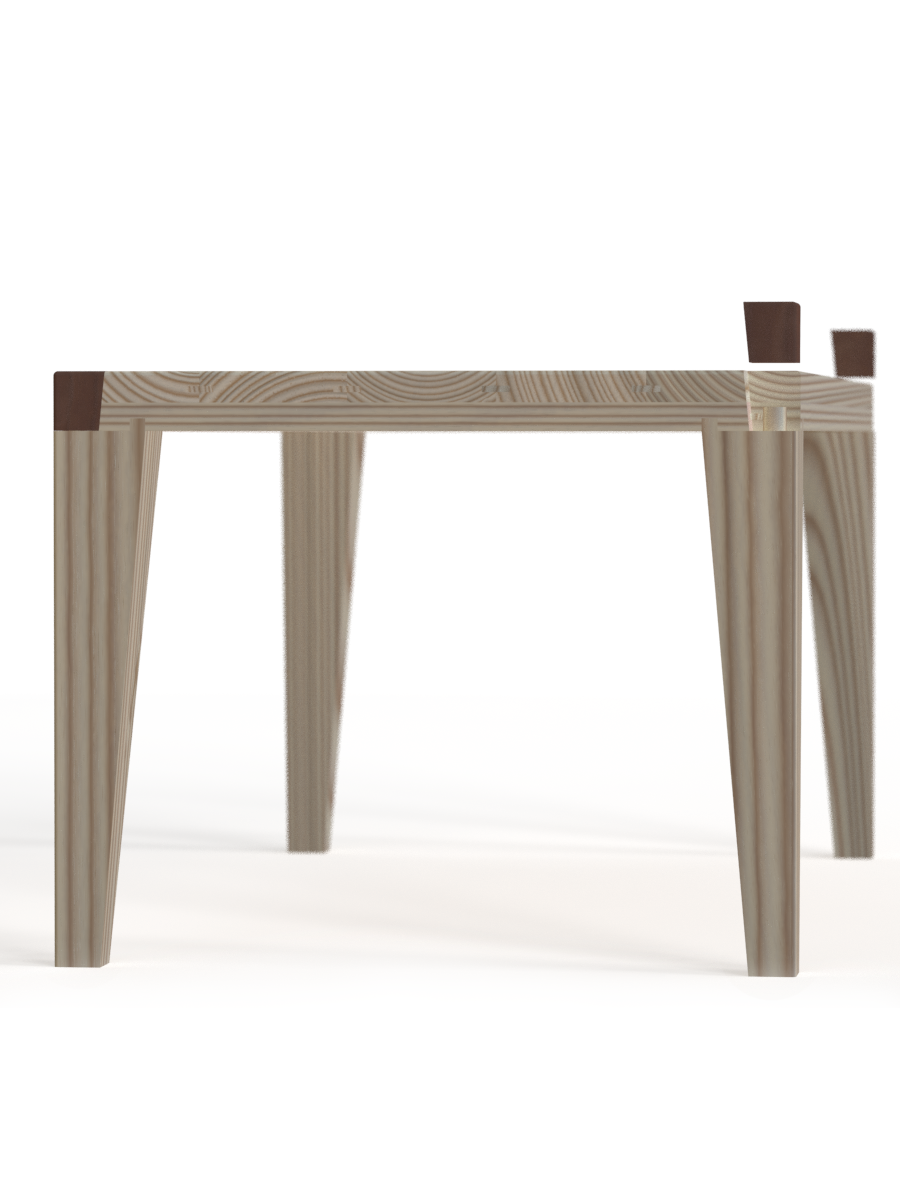
To avoid the toxic glues and un-recyclable nature of MDF, LuLu's top is crafted from solid ash, supported by an internal frame to provide a strong 40mm thickness without excess weight. The transparent finish allows the natural timber to age gracefully, showcasing the authenticity of the material.
Nostalgic Joinery
Instead of complex screws or confusing instructions, LuLu uses a secure, tool-less joining mechanism featuring concealed timber corner blocks and dowels. These blocks are intentionally reminiscent of children's toy building blocks, embedding a sense of nostalgia and playfulness into the assembly process.
The Solution: Cognitive Labor & Modularity
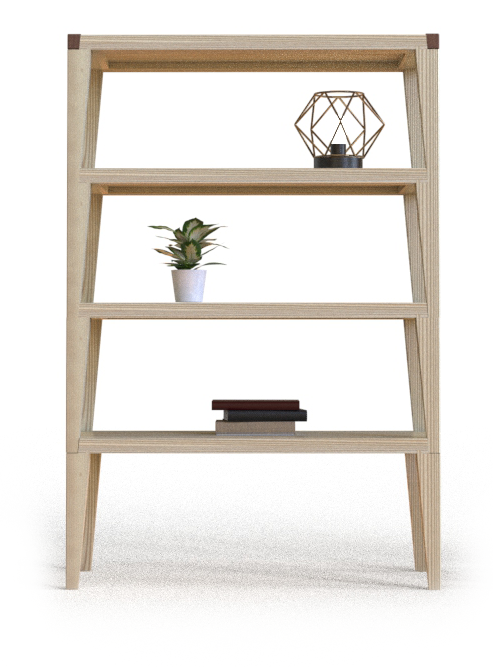
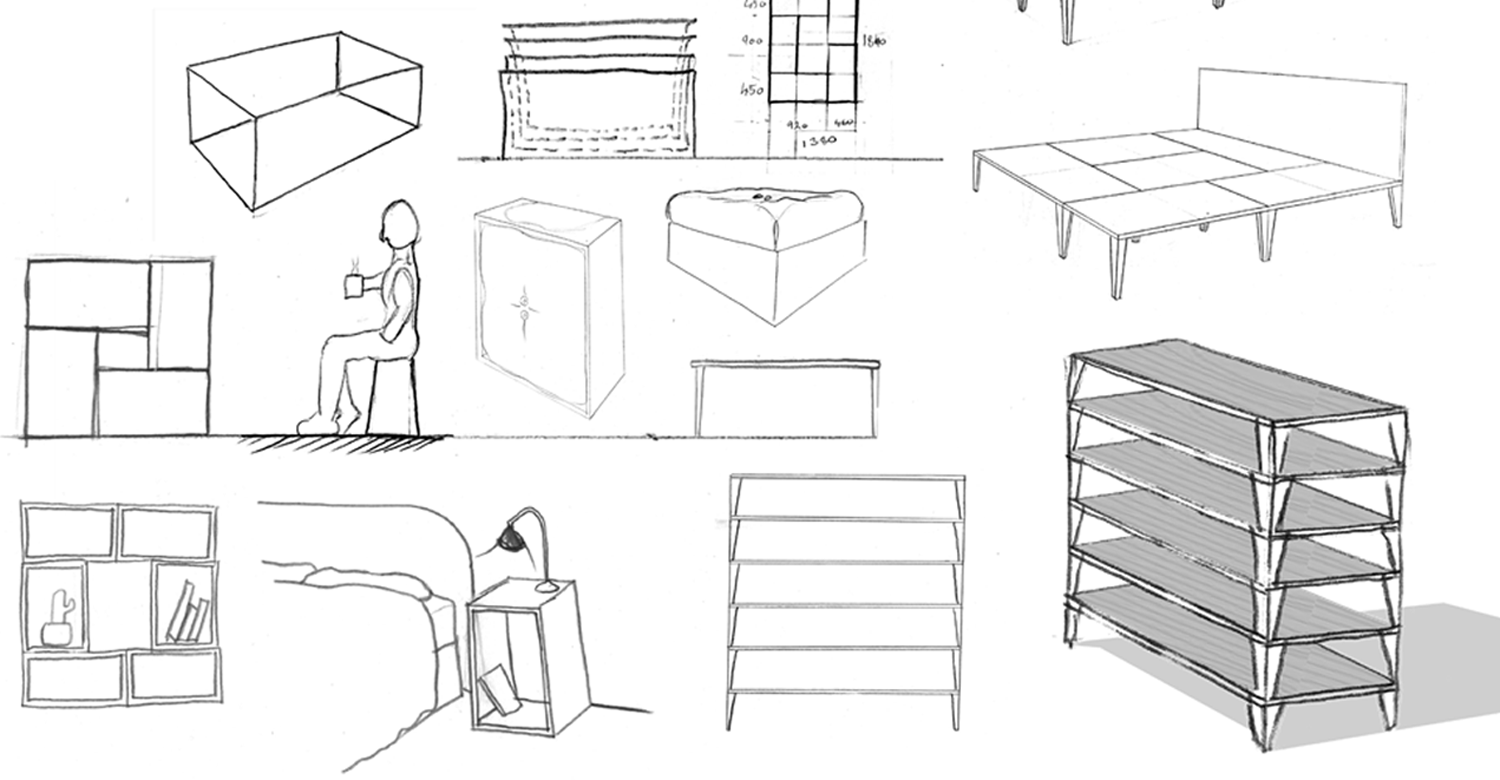
Inspired by Progressive Era designer Louise Brigham's "Box Furniture," LuLu was conceptualized to be fiercely modular. It replaces frustrating flat-pack physical labor with "cognitive labor"—empowering the user to creatively appropriate the furniture into their lives through layout choices and functional assignment.
Sustainable Manufacturing & Testing
To ensure LuLu could withstand a lifetime of use, the design was subjected to Finite Element Analysis (FEA) testing. Following this, I manufactured high-fidelity physical prototypes from solid ash and walnut. By leveraging 3D printing technology for specific components, LuLu enables on-demand customization while drastically reducing material waste.
Combining traditional woodworking joints—like the stopped mortise and tenon—with modern, CNC-adaptable processes ensures the furniture is both authentic and highly scalable.
The Modern Heirloom
By allowing continuous repurposing, LuLu achieves "Modern Heirloom" status—providing an equality of experience for generations of new owners.
In the final consumer evaluation survey, an average of 82.1% of participants indicated they would choose to take LuLu with them when moving accommodations, successfully proving its resilience against the fast furniture disposal cycle. It is no longer just a product; it is a companion for the nomadic lifestyle.